

 BTA Admin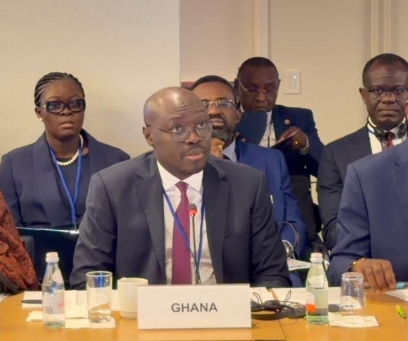
Finance Minister Dr Cassiel Ato Forson has warned public officials that government funds belong to the people of Ghana and must be managed with accountability, transparency and responsibility.
He urged officials to account for every cedi entrusted to them and recover all public funds that can be lawfully recovered, stressing that public office does not give anyone ownership of the nation’s resources.
Dr Forson made the remarks during an engagement on the Auditor-General’s Report attended by regional ministers and metropolitan, municipal and district chief executives (MMDCEs).
“Public money does not belong to government officials, we are only the custodians of those resources,” he said.
“Those resources belong to the people of Ghana: Our constituents, our citizens!”
Ato Forson demands recovery of public funds
The Finance Minister called on public officials to pursue the recovery of every cedi that can be recovered and ensure that they account for the funds placed under their care.
“So let us recover every cedi, that is recoverable! Let us account for every cedi that is entrusted to us as public officials,” he stated.
His comments place renewed emphasis on the responsibility of public institutions and their leaders to protect taxpayers’ money and ensure that public resources are used for their intended purposes.
‘Recovery must not become an annual ritual’
Dr Forson said recovering lost or mismanaged public funds alone would not be enough to guarantee accountability.
He called for stronger financial management systems that prevent losses and reduce the need for repeated recovery exercises following the publication of audit findings.
“But above all, let us build systems where recovery becomes the exception, not an annual ritual,” he said.
The statement highlights the importance of preventive measures, effective financial controls and institutional accountability in managing public funds.
What this means for Ghanaian taxpayers
The Auditor-General’s Report examines public financial management and can identify issues requiring corrective action, including financial irregularities and amounts that may need to be recovered.
For taxpayers, the central issue is whether calls for accountability translate into concrete action: recovering recoverable funds, addressing weaknesses in public institutions and preventing similar problems from recurring.
Dr Forson’s message is that public officials are accountable to citizens for the money they manage. The challenge will be ensuring that this principle is reflected consistently in the management of public finances across government institutions.
